You've no doubt heard about the harms of social media from plenty of outlets, so I won't rehash them. But there's one platform I actually recommend. That platform is X. Formerly known as Twitter.
Saying "You should X!" sounds strange, so in this letter I'll stick with the old name, Twitter.
Choosing your information sources matters. Most people never stop to think about where their information comes from. I touched on the importance of information sources briefly in a previous letter. (https://maily.so/sian.prof/posts/08cc8bf3) Back then I recommended Scribd (now Everand). Twitter, today's subject, is a genuinely good information source that doesn't cost you a thing.
For all its fame, Koreans use Twitter less than you'd think. There's a preconception that it's the social network where people say silly things. (Plenty of screenshots of Twitter's odder posts get passed around.) But used well, Twitter is genuinely great.
First, it's an easy source of insight. Follow the wrong accounts and you won't get much out of it. Follow good ones and you'll see a steady stream of short, insightful writing. So curate your follows carefully. A good move is to look up the authors of books that made an impression on you and follow them on Twitter. You get to absorb the writer's inner thoughts and perspective. Korean authors don't use Twitter much, but authors of foreign books often do.
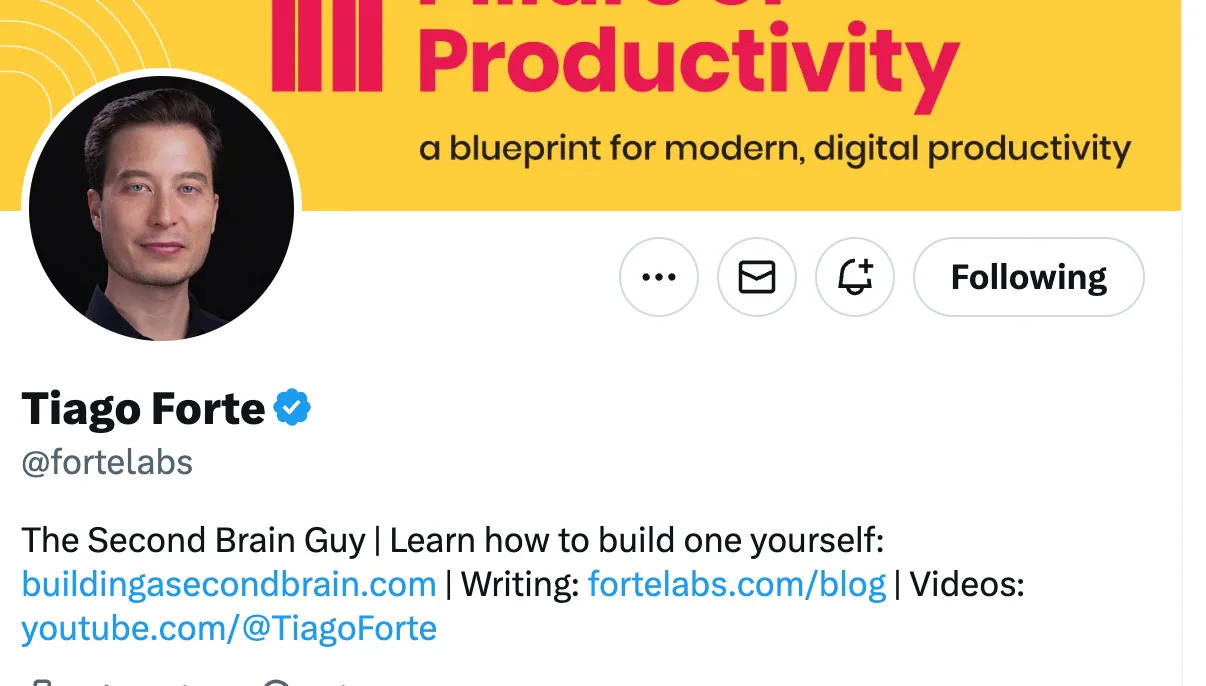
If you're reading this letter, you're probably interested in productivity, in which case Tiago Forte is worth a follow. He's been posting a lot of short, thought-provoking tweets about productivity lately, which makes him a solid pick.
Also, information spreads fast on Twitter. When something like a subway delay happens, I tend to search Twitter before checking the news. You find out what's going on faster than the news can tell you. And it's not just everyday information — useful trends spread quickly too.
I knew about ChatGPT back in December of last year, before it went mainstream, because it was already hot on Twitter. The narratives that would hook people — that it would replace Google, and so on — had already spread. At the time there wasn't a single YouTube video explaining ChatGPT, and I considered posting the first one in Korea, but for some reason my energy was low that December and I never got around to it. If you want to track tech trends closely, I'd call Twitter essential. The lag between how fast information spreads abroad and how fast it spreads here is remarkably small. (Thanks to the retweet function.)
Finally, you get to see various knowledge-business models actually in action. Twitter is the "field site" where you can watch how people sell insight and perspective. They hook you with short posts, get you to subscribe to their newsletter, and ultimately try to sell you their course or ebook. You can watch the whole thing play out — from the hook to the conversion into revenue.
That said, this applies only to foreign accounts. Korean accounts tend to circulate oddball takes or obvious ones. I suspect the Korean Twitter user base is simply too small to support targeting a niche. As the top of a funnel, Twitter doesn't really work in this country.
I'll close by leaving my Twitter handle. I follow accounts related to development and productivity. Getting started on Twitter can feel daunting. You might try starting out by following whoever looks interesting from my following list.