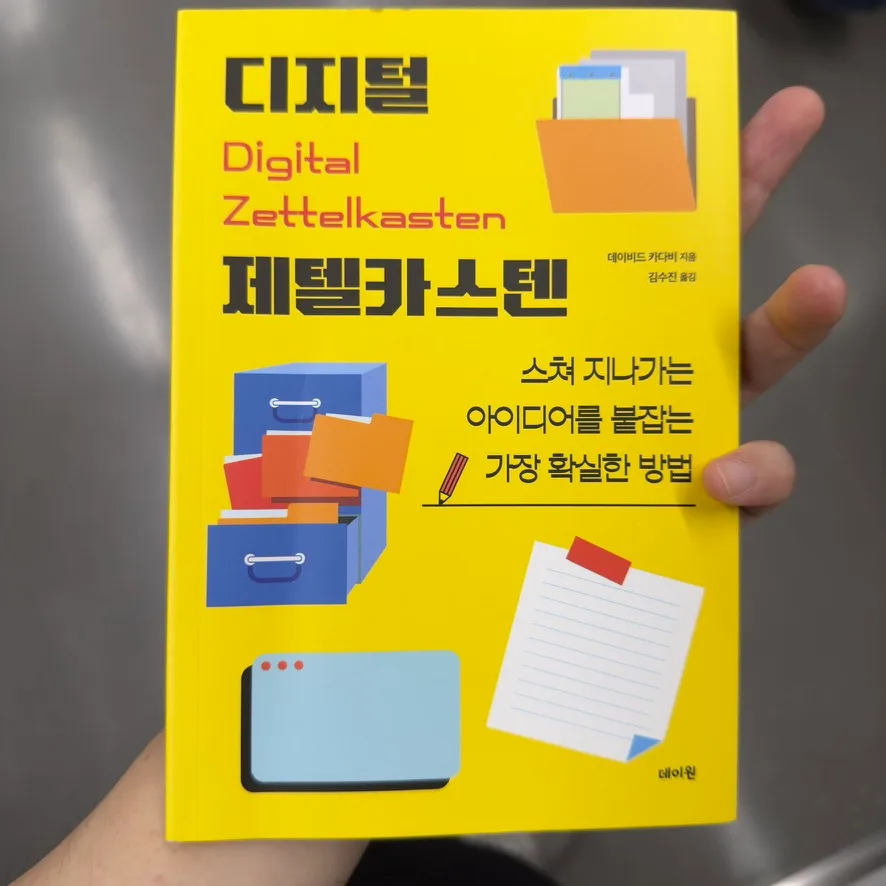
I used to know about the Zettelkasten and still not use it. It felt like a buzzword, and I never saw results from it. Then something brought me back to it. Producing knowledge and content inevitably led me to the Zettelkasten. Not because the Zettelkasten is so remarkable, but because right now there's nothing better. Is there any better method for creating than gathering your everyday thoughts, connecting them, and turning them into something finished? Even by process of elimination, I kept landing on the Zettelkasten.
I read Digital Zettelkasten a while back in the original English. It's easy and short, so I finished it quickly. But it deals with the single most important thing in the Zettelkasten: mindset. What I value most in any productivity methodology is 'reproducibility' and 'sustainability.' Anyone should be able to follow it, and you should be able to keep it up.
To keep it up, it has to be low-pressure and fun. Once the notes pile up and it starts to feel like work, it won't last. And Digital Zettelkasten shifts your mindset so that the Zettelkasten feels lighter and more enjoyable. It doesn't introduce any special methodology. It simply tells you how to ease off. And it makes it fun.
If the Zettelkasten is clearly a method you need but taking notes feels burdensome, I recommend giving this a read.
This book was sent to me free of charge by Day1 Publishing. It probably won't sell many copies and it only costs 10,000 won, so I'm genuinely grateful they translated and published it. Contrary to expectations, I hope it sells well. The translator is Kim Su-jin, who also translated Sönke Ahrens's How to Take Smart Notes — so I'd say the publisher cares about the Zettelkasten and chose the right translator.