Here are some tips worth knowing when you use Obsidian on the iPhone. Despite the title, a fair amount of this applies to iPadOS and macOS too — even to Galaxy phones.
I used to barely use Obsidian on my iPhone because it felt so awkward, but lately I've been getting a lot of mileage out of it.
The truth is, the phone experience has to feel good before you'll bother checking your notes while you're out and about. If it feels like a hassle, you just won't use it.
This post assumes you're syncing Obsidian via iCloud Drive. Since iOS 18, Keep download has cut initial loading times considerably, so iCloud Drive now delivers sync performance you can actually be happy with.
I won't be covering the basics here. This is written on the assumption that you already have some experience with Obsidian on iOS.
Syncing Obsidian via iCloud on the iPhone
For anything related to sync, please see the document above.
Configure it differently from your PC
For most people, mobile performance is inevitably lower than PC performance. That means features that ran without a hitch on your PC can drag things down on mobile. So I recommend using different settings on PC and mobile. You do it by pointing to a different config, as in the screenshot below.
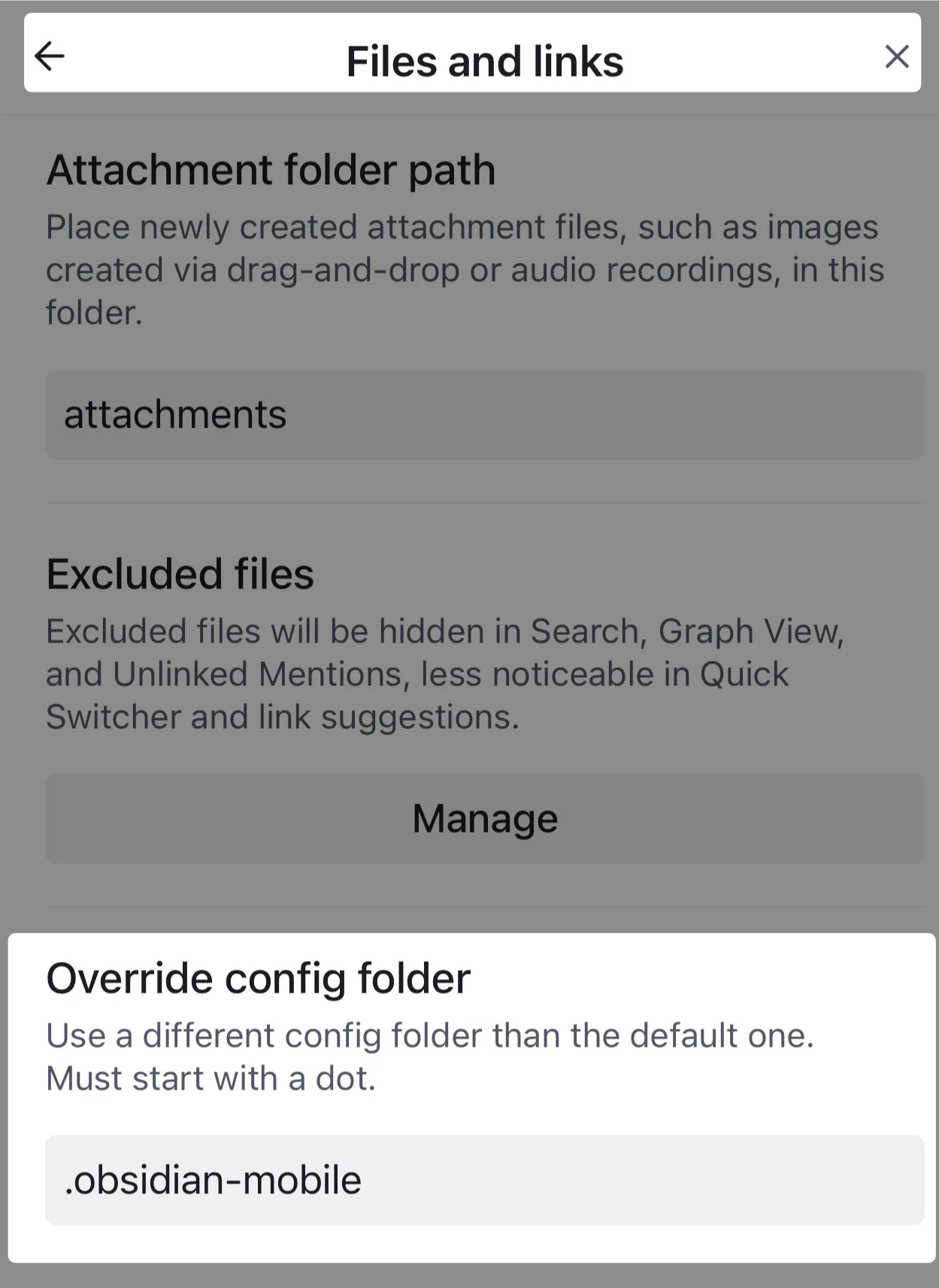
Once you've split your settings like this, here's the direction I'd suggest taking them.
- Go with the default theme. Theme CSS degrades performance more than you'd expect.
- Just as on your PC, get rid of community plugins you don't use on mobile. You're probably using fewer features on mobile than on your PC anyway. On mobile, focus on convenience.
The toolbar and quick actions
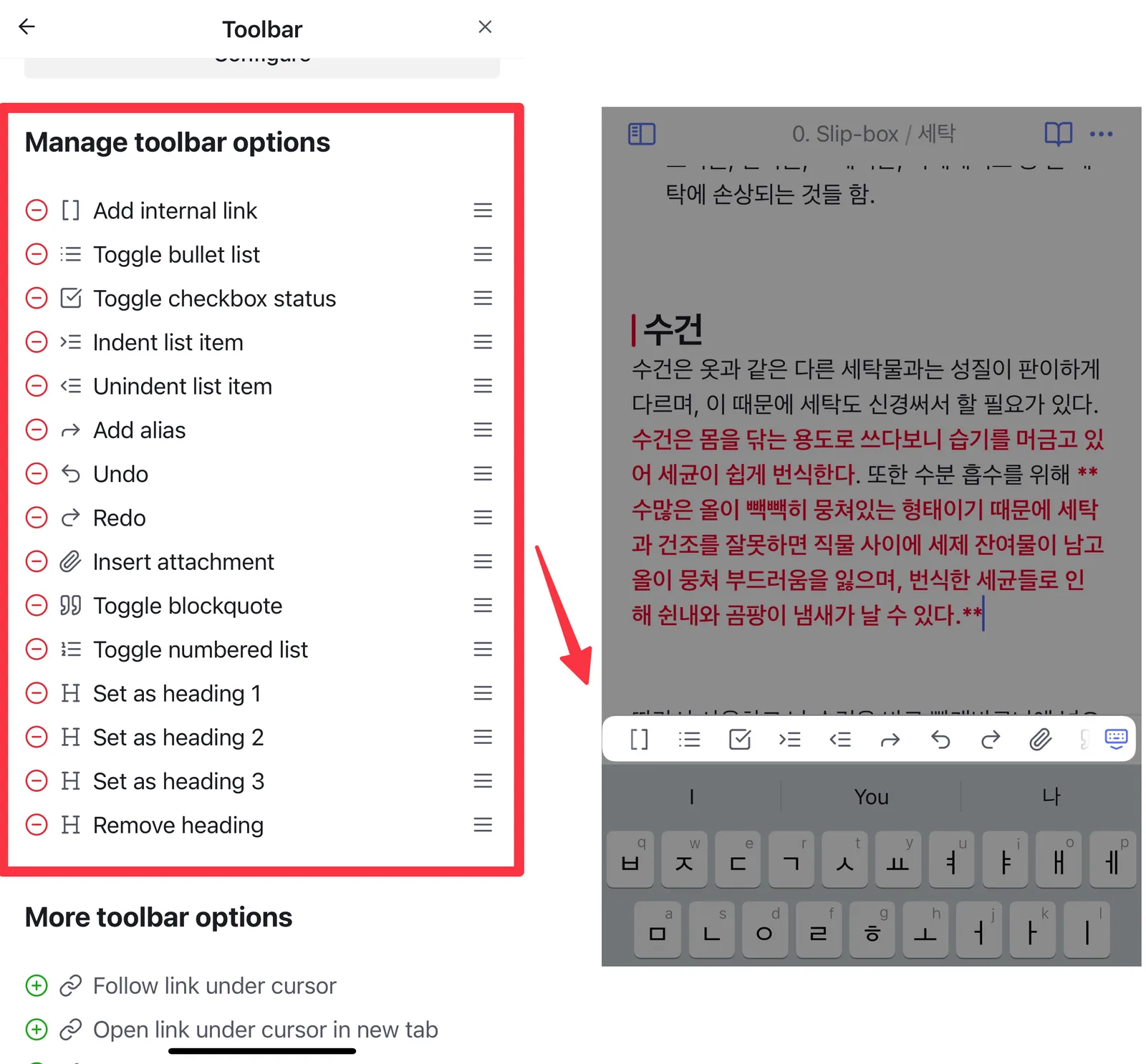
If there are features you rarely use on mobile, there are also ones you use constantly. Those are worth adding to the toolbar. Markdown in particular is hard to type on a phone, so putting it in the toolbar makes it much easier to work with.
Another convenience feature on mobile is Quick action. That said, I don't use it. I have a habit of scrolling down a lot, and every time I do, Quick action tends to fire unintentionally. So I've disabled it.
By default, Quick action launches the command palette. On mobile you're not doing the kind of heavy work that calls for the command palette anyway, so it's better left off. On the rare occasion you need the command palette, you can launch it from the ribbon.
Getting there fast: Advanced URI
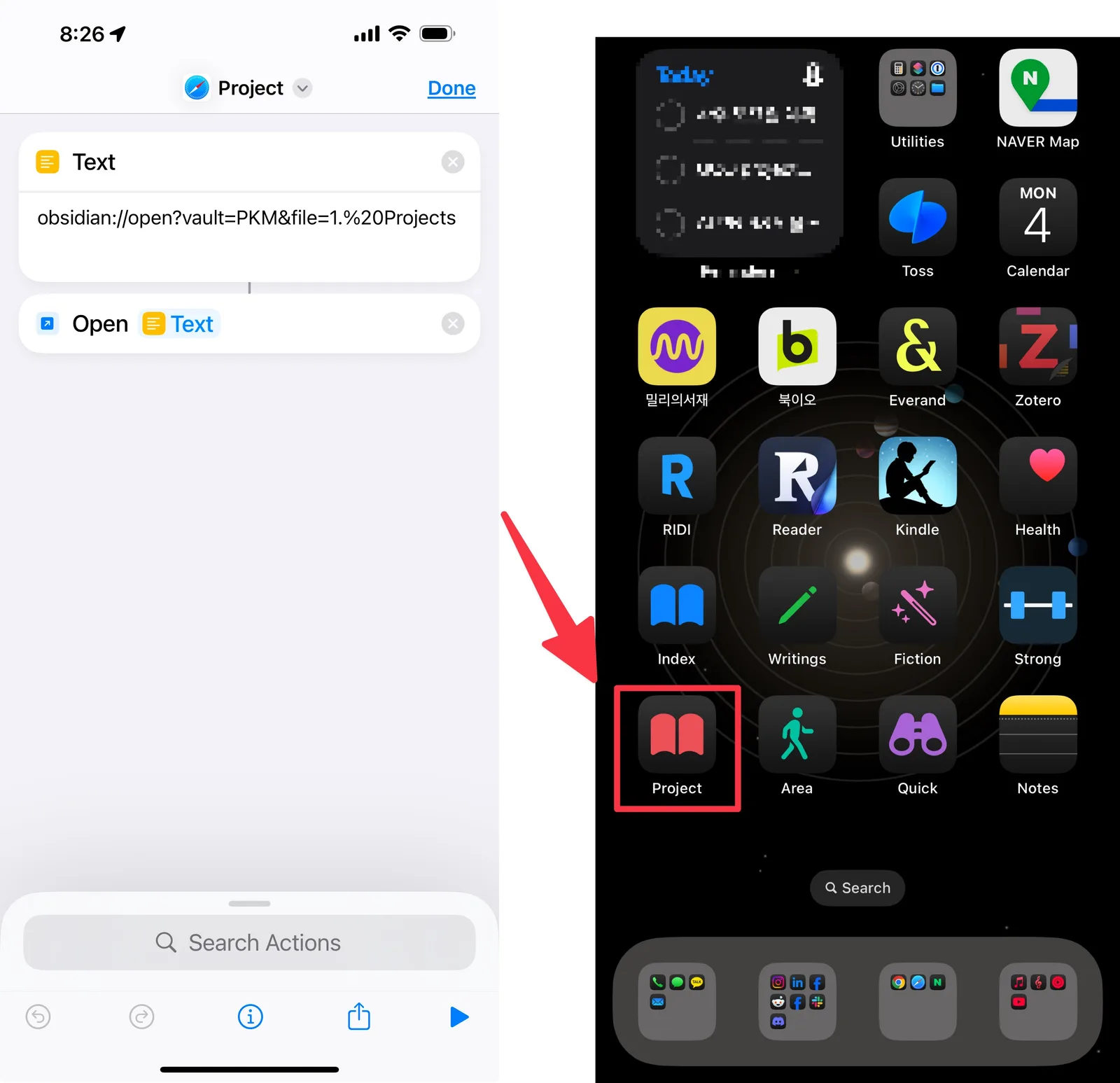
If there's a note you read or work in often, it's worth setting things up so you can jump straight to it from your home screen. The easier something is to reach, the more often you'll read and write in it. The fewer pointless hurdles, the better.
One community plugin that's handy for this is Advanced URI. Advanced URI lets you run Obsidian commands via a URI. Combine it with Apple Shortcuts and you can go straight from your home screen to the note you want.
With Advanced URI, you can open a note directly with obsidian://open?vault={볼트명}&file={노트명}.