It's genuinely hard to feel the effects of a Zettelkasten. So even while using one, you wonder whether you're doing it right. That's why I want to lay out some criteria for what counts as doing it well.
1. Reference notes — you can find the source
When an idea or thought we read long ago comes back to us, what surfaces is the idea itself, not where it came from — unless we read the source recently or were deeply moved by it. What I mean is this: when an idea occurs to you, you've forgotten which book or video you read it in. That becomes a problem when you have to cite a source while writing a book or a paper, or when you want to dig back into that thought in depth.
But if you've written your reference notes properly and connected them to your permanent notes, you can trace where any given thought came from. That helps when citing sources, and it tells you what to go back to when you want to revisit an idea in detail.

2. Reference notes — you can connect outside knowledge to your own mental models
If you're connecting the outside knowledge you pick up while reading to your own mental models, you're using reference notes well. Connecting reference notes to mental models makes learning easier. You're linking knowledge to your own context, after all.
Let me give an example so you can feel the power of connection. Arteries, which carry blood out from the heart, are somewhat thicker and more elastic. Veins are thinner but have valves. Trying to memorize facts like these on their own is hard.
But arteries have to withstand higher pressure because blood is pumped out of them by the heart. And veins, where pressure has dropped as the blood flowed along, only have to handle lower pressure — but precisely because that pressure is lower, they need valves to prevent backflow.
This fits with mental models you already hold: when something takes more force, it needs more material to support that force and all motion meets resistance and loses force. Once it's connected to your mental models like this, memorizing the traits of arteries and veins becomes much easier.
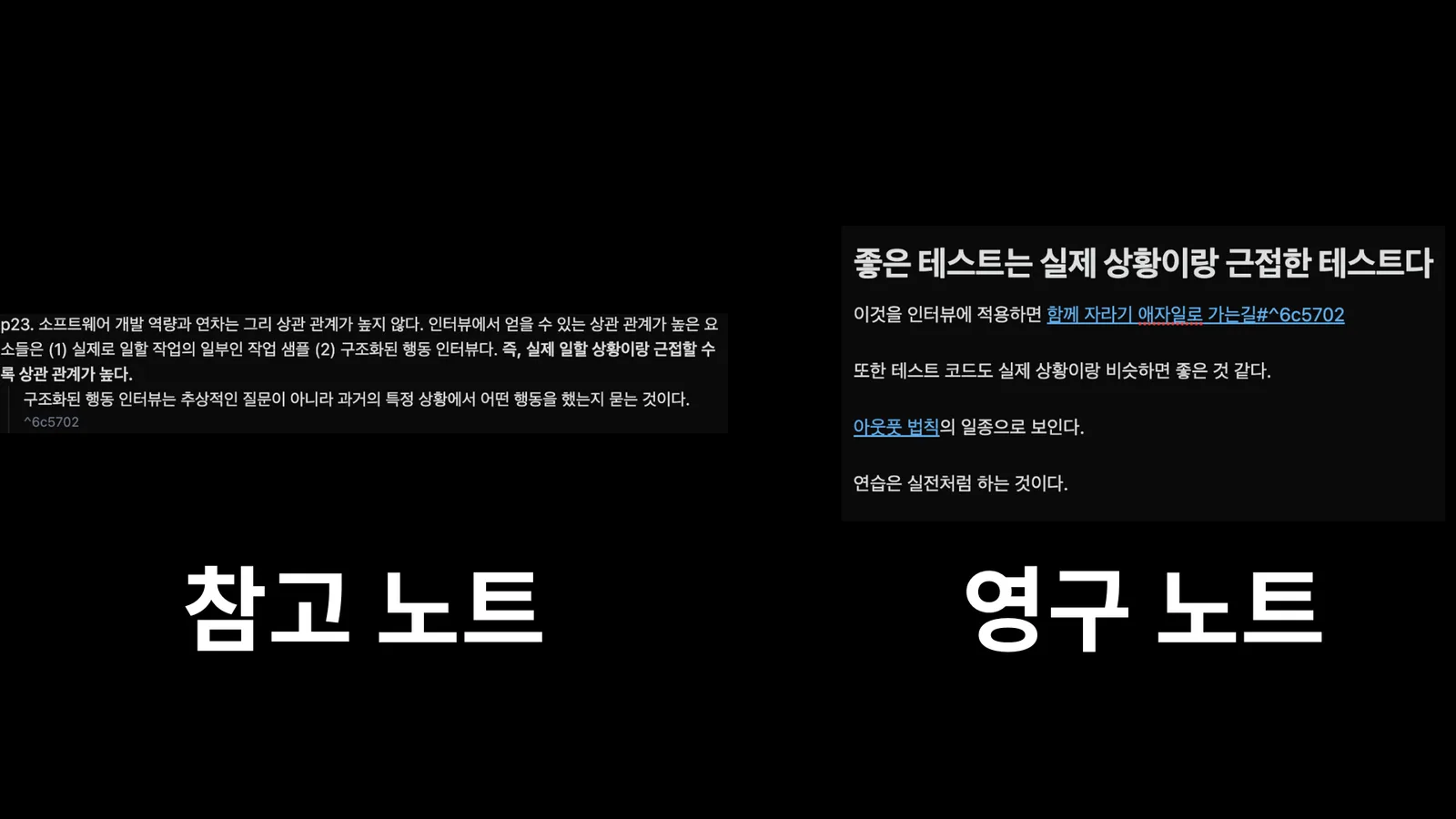
In the same way, connecting the contents of a reference note to your existing mental models or permanent notes makes it easier to remember. The reference note above says that when hiring developers, years of experience isn't what matters — asking them to do a piece of the actual work is the more important factor. Just reading that, you'd have a hard time recalling it later. Would it even come to mind during an actual developer interview?
But it got connected to a permanent note I already had — a good test is one that closely resembles the real situation — and became easy to remember. That permanent note is itself part of my mental model that practice is best done the way you'd do it for real, which is what let me retain the book's content.
3. Permanent notes — you can pick your thinking back up
To think deeply about an idea, writing it down somewhere is essential. Otherwise your thinking gets fragmented. When thinking is fragmented, you end up rethinking thoughts you've already had, or not knowing what to think about next. And then you can't think deeply — you're left with only shallow thoughts. This is true not just of the Zettelkasten but of the whole case for a second brain.
The Zettelkasten solves the fragmentation problem. A working Zettelkasten helps you continue your thinking. It helps you form your own thoughts out of reference notes. It lets you extend a thought from one permanent note to another. And structure notes tell you what to think about next.
I think this connectedness of thought is the key factor separating a Zettelkasten that works from one that doesn't. Beginners branch out shallowly from one note to many. That's because they're used to top-down thinking. Experienced practitioners, by contrast, end up with a shape where a single note extends deep. And those long chains of notes connect to one another.
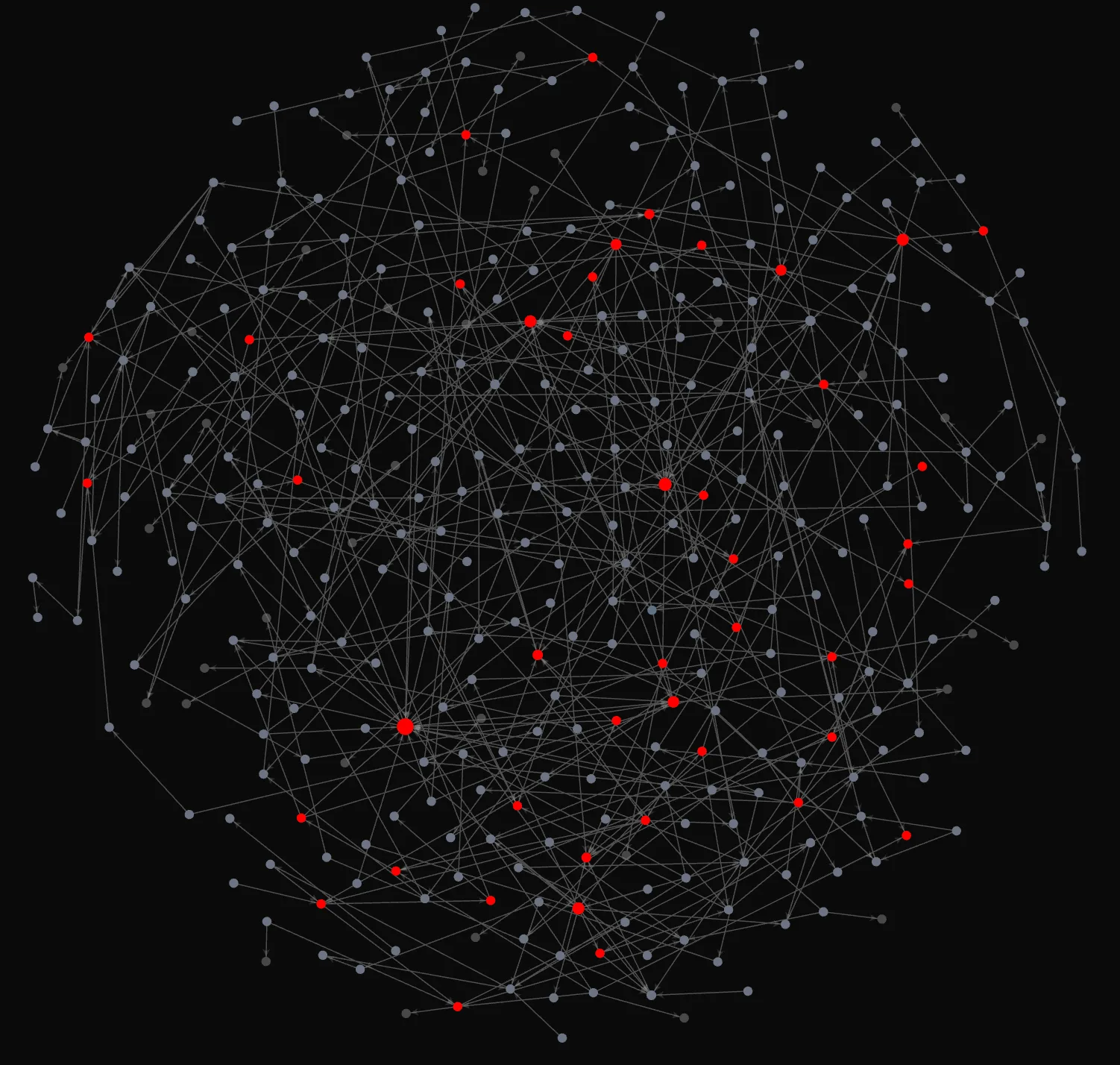
Here's the difference as it shows up in Obsidian's graph view.
These are my permanent notes. You can see there's no visible pattern — the notes are densely and lengthily linked to each other. In other words, they're tightly related.
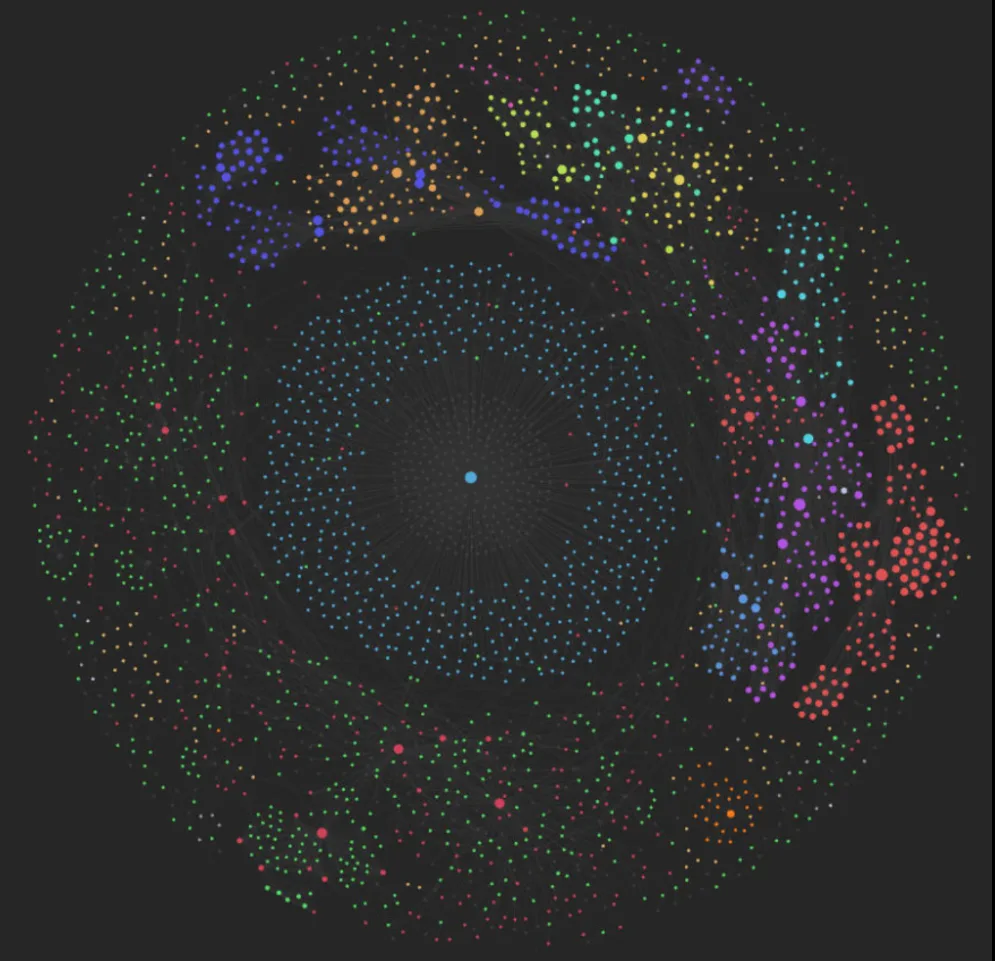
When you can see a clear pattern like the one below, it may be pretty, but it probably isn't a working Zettelkasten. When notes link to each other in long chains, the pattern disappears. A Zettelkasten that isn't working looks like this — thoughts radiate out from a single point, and those thoughts never connect.
4. Permanent notes — you can use them to produce output
What made the Zettelkasten famous was, in the end, Niklas Luhmann's prolific output. Ultimately I think you only see the benefits of a Zettelkasten when you put it to work in production. If you're not using it to produce output, there's no payoff for all the effort of writing reference notes and permanent notes. However you go about it, if you end up using it to produce output, I'd say you have a working Zettelkasten.
Finally, let me address a few misconceptions about the Zettelkasten
- You don't need 1,000 notes to feel the benefits
There's a narrative that to feel the effects of a Zettelkasten, notes have to accumulate — that you need 1,000 of them. I think that narrative started with the book How to Take Smart Notes. My view is that what matters for the effectiveness of a Zettelkasten is the density of the notes, not the total count. Even 100 notes gathered around a single topic and line of thought are plenty to produce a good deal of online content. (The number 100 isn't the point — I'm emphasizing that you don't need all that many notes.) One piece of content will use maybe 5–10 notes. Even with 1,000 notes, if the topics are scattered and they aren't properly connected, you won't feel the effect. And the content you end up making won't be particularly distinctive either.
- The Zettelkasten won't make you a better writer
And because the Zettelkasten is a tool for writing, you might expect it to improve your prose. If you're using a Zettelkasten to develop your writing chops, I think you've got the wrong idea. The Zettelkasten deepens your writing; it isn't a tool for making your writing tastier. For that matter, I can't confidently claim to be a good writer myself.
Of course, writing a lot may improve your prose to some degree. But I think improving your prose ultimately requires deliberate practice with feedback. There's no deliberate practice in the Zettelkasten workflow.